
随着电商、远程办公及外卖平台等消费形态持续蓬勃发展,跨境交易和在线支付的使用率不断攀升,支付卡信息安全变得日益重要。为保护持卡人个人信息,支付卡产业安全标准委员会(PCI SSC)要求所有存储、处理或传输持卡人数据的机构,都必须遵守 PCI DSS 合规要求。
什么是 PCI DSS?
PCI DSS 是 Payment Card Industry Data Security Standards(支付卡产业数据安全标准)的缩写,由国际组织 Payment Card Industry Security Standard Council(PCI SSC)制定并管理,这套标准专为保护支付卡数据免遭未经授权的访问与滥用而设计。PCI SSC 由全球主要信用卡组织组成,包括 American Express、Discover Financial Services、JCB、MasterCard、Visa Inc. 及中国银联。
PCI DSS 标准是一套聚焦于保护上述品牌持卡人信息的行业通用准则,适用于所有存储、处理或传输持卡人数据的机构——凡处理这些品牌支付卡的商户或服务提供商,无论其规模或交易量大小,都必须遵守。
谁需要 PCI DSS 认证?
凡存储、处理或传输持卡人数据的所有机构,都必须遵守 PCI DSS 合规要求。第一步:先确认机构属于商户(Merchant)还是服务提供商(Service Provider)。
商户
接受支付卡付款以换取商品或服务的组织——包括实体门店、在线商店,以及提供可下载虚拟商品或服务的企业。
服务提供商
在其提供的服务中传输、处理或存储支付卡持卡人数据,或能控制、影响持卡人数据安全的机构——包括第三方支付处理机构、支付网关服务商、电子钱包服务商及在线交易平台。提供虚拟主机服务的数据中心与云服务提供商也属于此类。
第二步:确认 PCI DSS 等级。等级一的商户与服务提供商,须由合格安全评估师(QSA)进行现场评估;等级二至四的商户与等级二的服务提供商,可使用 PCI DSS 自我评估问卷(SAQ)进行自我评估,或寻求 QSA 协助,以更快速、准确地完成评估。
谁可以协助 PCI DSS 认证?
QSA(Qualified Security Assessor,合格安全评估师)
由 PCI SSC 授权的专业人员,经过培训与认证,可执行 PCI DSS 评估并出具合规报告(ROC)与合规证明(AOC)。QSA 必须定期更新其资质认证,以掌握最新版本的 PCI DSS。若您的机构属于等级一的商户或服务提供商,则必须由 QSA 进行现场评估。
QSAC(Qualified Security Assessor Company,合格安全评估机构)
聘用 QSA 并提供专业评估与咨询服务的公司。QSAC 可协助您了解 PCI DSS 的具体要求,并指导您建立安全的支付环境。
如何选择 QSA 与 QSAC?
- 访问 PCI 安全标准委员会官方网站,查证已通过认证的 QSA 与 QSAC
- 向已完成 PCI DSS 评估的同行或合作伙伴咨询其经验与推荐
- 查看候选 QSA 与 QSAC 的客户评价与案例,确认其经验与专业能力
- 与多家 QSA 或 QSAC 进行初步咨询,了解其服务范围、费用与工作流程
该怎么做?
PCI DSS 合规评估通常包含四个主要阶段:
1. 准备阶段
范围确认与顾问辅导阶段——初步评估现有安全措施以找出差距,界定评估范围(系统、网络与应用程序),聘请顾问或 QSA,并为员工提供信息安全培训。
2. 数据准备阶段
准备与实施必要的控制措施——制定并更新安全政策与操作规程,收集并整理所有证明合规所需的文档与证据。
3. 评估阶段
由 QSA 进行现场评估——正式评估前先进行内部检查,确保所有问题均已处理,再由 QSA 主导现场评估,验证实际操作与文档记载的一致性。
4. 报告阶段
QSA 撰写合规报告(ROC)与合规证明(AOC);您将报告提交给支付卡组织或收单机构,并取得 QSAC 颁发的合规认证。
需要多长时间?
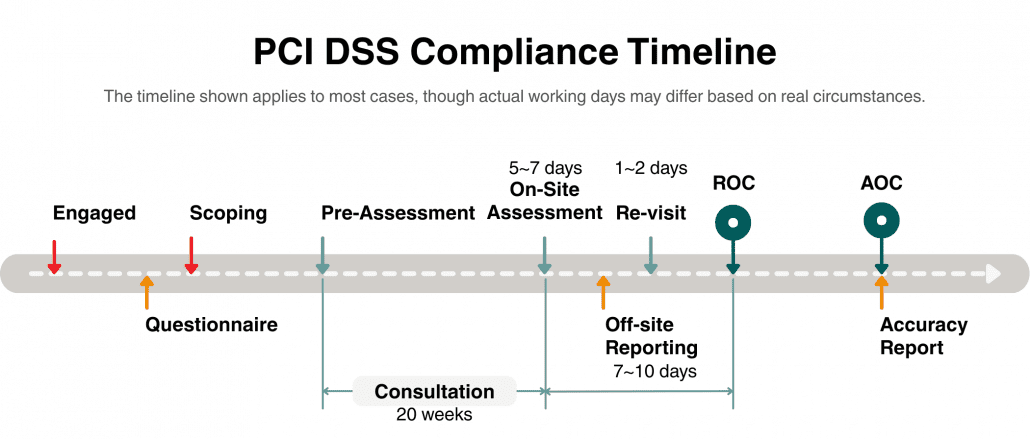
从初期环境验证到提供最终报告,取得 PCI DSS 合规认证的整体周期约为三至五个月:
- 准备阶段(1–2 个月):环境验证确认与顾问咨询阶段
- 数据准备阶段(1 个月):准备和实施必要的控制措施
- 评估阶段(5–7 天):由 QSA 进行现场评估
- 报告阶段(0.5–1 个月):QSA 撰写并提交合规报告与认证
实际周期可能因准备程度、系统与业务的复杂度,以及投入的资源(人力、时间与预算)而有所不同。为确保流程顺利高效:请尽早开始准备、与您的 QSA 保持密切沟通,并在取得认证后持续维护与改进安全措施,以保持长期合规。
费用多少?
首次导入 PCI DSS 合规的预估额外费用:
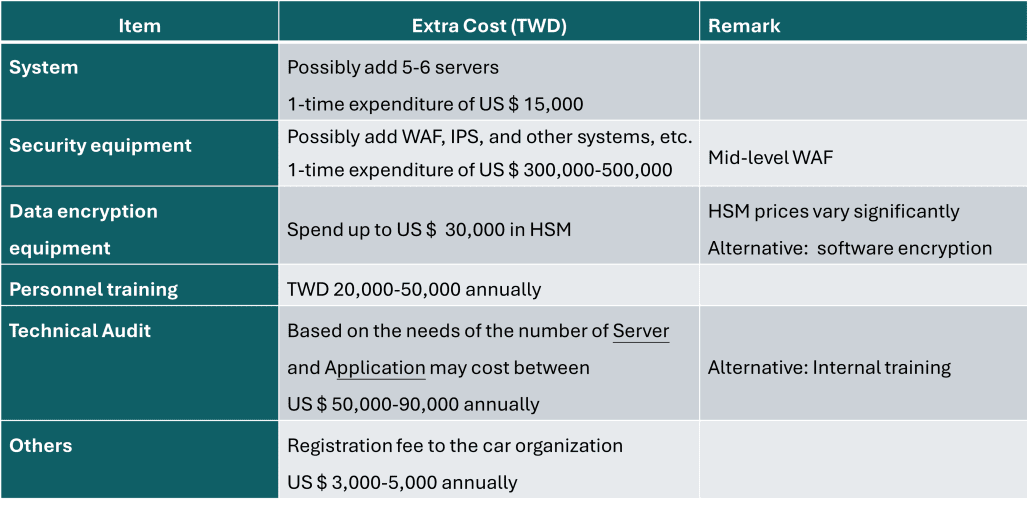
A. 系统
由于 PCI DSS 的高安全要求,部分系统可能需要分离,以符合每个系统组件仅能有一个主要功能等要求(Req. 2.2.3)。原本部署在同一台主机上的 Web Server、Application Server 与 DB Server 等功能可能需要拆分,因此可能需要额外的服务器设备(可使用虚拟服务器)。此外,也可能需要 NTP Server、FIM Server(文件完整性管理)与 Log Server 等安全组件。
B. 安全设备
为符合 PCI DSS 安全要求,可能需要采购额外的安全设备,例如防火墙等网络安全控制设备(NSCs)、入侵防御系统(IPS)、入侵检测系统(IDS)及 Web 应用防火墙(WAF)。
C. 数据加密设备
视您的环境而定,可能需要数据加密设备及相关控制措施,以保护存储的持卡人数据。欢迎联系我们的顾问,为您的环境提供详细的评估报价。
D. 人员教育培训
PCI DSS 要求对人员进行教育培训,包括安全意识培训、安全编码培训,以及事件响应计划(IRP)演练。若由内部人员执行漏洞扫描或渗透测试,这些人员也须接受足够的安全培训,可能因此增加培训成本。
E. 技术检测
PCI DSS 要求定期执行多项技术检测,包括内部漏洞扫描、外部漏洞扫描(ASV)、内外部渗透测试、无线网络扫描、卡号扫描与代码审查等。这部分通常会产生额外费用。
F. 其他
若您是服务提供商,收单机构或卡组织可能要求您注册于其服务提供商名录,例如 VISA Registry 或 MasterCard SDP(Service Provider Registration)。
对于首次导入 PCI DSS、规模中小型的服务提供商,预估的额外费用项目如下:
PCI DSS 认证费用?
除了上述可能的额外费用外,PCI DSS 评估费用也会依 QSA 完成评估与报告所需的时间而有所不同。
预估评估时间取决于下列因素:
1. 系统复杂度:主机数量、使用的操作系统类型、系统上安装的组件、多种操作系统配置与安全配置,都会影响审查时的抽样数量并增加审查时间。
2. 安全设备与网络:评估范围内的安全设备数量,例如防火墙、IPS、IDS、WAF、交换机、路由器、SIEM、DRP 等,都需要检查配置、更新、访问控制与日志等;设备越多、网络规划越复杂,评估时间就越长。
3. 与收单机构及服务提供商的连接:与收单机构及服务提供商的连接越多,数据流(Dataflow)就越复杂,需要更多时间检查。
4. 数据库与卡号数据的存储及加密方式:多样的卡号数据流与存储方式需要更多加密或安全措施,因而增加检查项目。
5. 运营网点数量:门店、数据中心与运营办公室的数量会增加评估所需天数,例如银行、电信公司及拥有众多门店与办公室的企业,抽样范围较大。此外,存储卡号数据的备份数据中心也在评估范围内。
一般而言,PCI DSS 评估费用因地区而异,原因包括 PCI SSC 设定的年费不同,以及各地区 QSA 的薪资水平差异。以东南亚为例,中小型服务提供商的现场评估约需 3–5 天,报告撰写约需一周。不含差旅费用,PCI DSS 认证费用通常介于新台币 40 万至 60 万元之间。
实际报价仍取决于上述复杂度因素。
无论您是跨境电商、第三方支付平台或服务提供商,符合 PCI DSS 合规要求都至关重要。落实这些合规措施,不仅能向收单银行与监管机构提供合规证明,也能直接帮助您的企业降低数据泄露与窃取的风险,并提升消费者对交易安全的信心。
PCI DSS 合规包含超过 400 项要求,涵盖标准的理解与解读、证据提供、取得认证,以及后续的合规维护。要如何确保持续合规?
建议可考虑委托 QSAC(合格安全评估公司),帮助您在短时间内快速且有效地完成合规。
取得认证后,您可以使用合规管理系统,其提供自动化监控、告警、定期数据提交与实时可视化状态等功能,确保企业随时保持合规与安全。